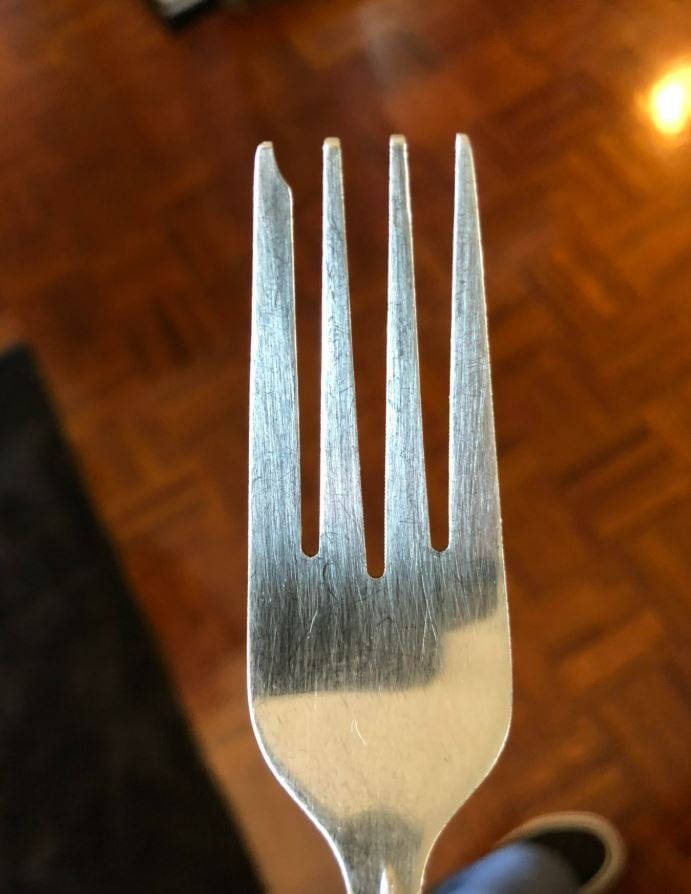
If you’ve ever pulled a fork from your drawer and noticed one of the prongs looks chipped or cut short, you’re not alone. Many people assume it’s a factory defect or that the utensil was damaged in the dishwasher. But here’s the truth: that “broken” prong is actually an intentional design feature, and the utensil you’re holding might be one of the most underrated tools in your kitchen.
The Hidden Genius of the Cutting Fork
This special utensil, often called a cutting fork or utility fork, was designed to make eating and food preparation easier. Instead of requiring both a fork and a knife, the modified prong allows the fork to perform a gentle slicing action. That means you can cut soft foods like omelets, pancakes, fish, pasta, or tender chicken with just one hand.
The shortened or notched tine creates a sharper edge, giving you leverage to separate food without sawing. It’s a small detail that delivers big convenience — and that’s exactly why these forks are found in premium stainless-steel flatware sets and modern kitchen utensil collections.
Why the Cutting Fork Became Popular Again
As kitchen design trends evolve toward minimalism and multi-functionality, many homeowners are rethinking what they actually need in their utensil drawers. The cutting fork fits perfectly into this shift: one simple tool that does more with less.
- Efficient design: Perfect for quick meals and casual dining.
- Ideal for compact kitchens: Fewer utensils, less clutter.
- Aesthetic appeal: Modern flatware sets often include one prong-modified fork for visual contrast and utility.