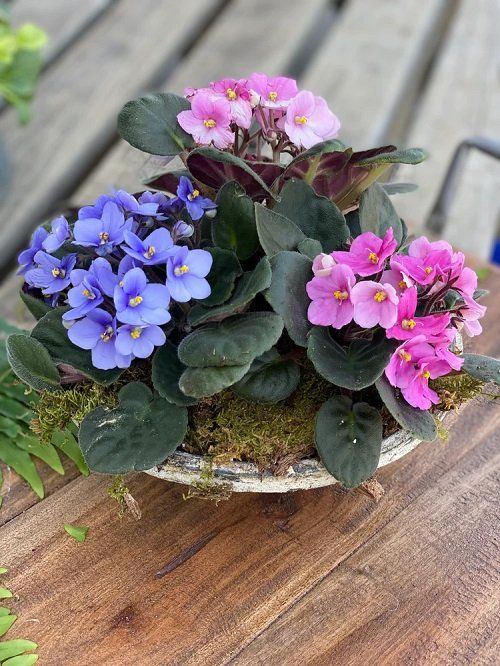
It hates wet feet, so don’t expose it to rainfall and avoid overhead watering. Instead, directly target its roots to hydrate efficiently by bottom watering. This plant is so sensitive that water that’s too cold may strip the color of its petals, and too hot could damage its leaves! And it doesn’t like misting either.
Pruning faded flowers, and deadheading ensures prolific blooms. If your African violets aren’t producing blooms or have pale leaves, it’s a sign that the plant isn’t getting proper nourishment or that pests are bugging it. Supplement it with a phosphorous-rich fertilizer and examine it closely for pests and don’t forget to read this article.
In conclusion, you could try growing African violets outdoors if you can promise to keep everything steady. Perhaps a shade garden with ample humidity, compost-rich, well-draining soil, and part sun works.
However, growing them in containers is ideal and safeguards your plant from the risks of sudden fluctuations. If and when conditions change, you can quickly move this delicate flower to its safe and happy space!