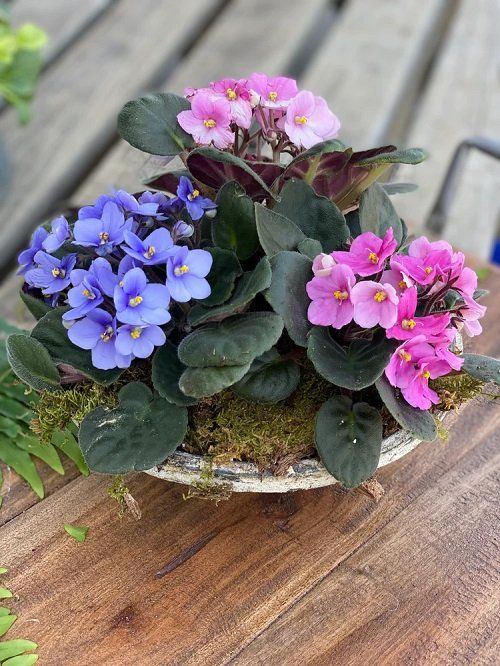
What do African Violets Need to Thrive?
Beneath the forested canopies of their native habitat, plenty of shade, filtered sunshine, humidity, and constant weather and conditions enable them to flourish. They grow well outdoors in Tanzania or in places with similar growing conditions.
But it’s obviously difficult to replicate massive tropical trees and identical ecosystems in North America’s continental and temperate climes. This is the main reason why African violets thrive indoors but bomb outdoors.
However, gardeners have successfully created suitable microclimates using greenhouses and other means to grow African violets outdoors in contrasting regions.
By providing these floral belles the care they need, you can enjoy perpetual year-round blooms, with some living up to 50 years!
Ideally, African violets prefer daytime temperatures of 70-90 F (21-32 C) and a nighttime range of 65-70 F (18-21). They cannot withstand prolonged periods outside these ranges, so if your outdoor temperatures dip or rise sharply, they won’t survive. If you can maintain consistency in the temperature, they would.
This plant also requires protection from direct sunshine. Its delicate leaves and petals can scorch under overexposure. It also needs humidity of 40-60% to thrive. These specifics are easy to simulate indoors, using humidifiers, grow lights, filtered sheer curtains, etc.
Keeping it in cozy spots like bathrooms and kitchens or placing the pot in a tray filled with water and gravel helps with the humidity. Also, rotating saintpaulia regularly so all parts receive dappled sunshine uniformly helps the plant grow evenly and look its prettiest.
Can African Violets Grow Outdoors Partially?
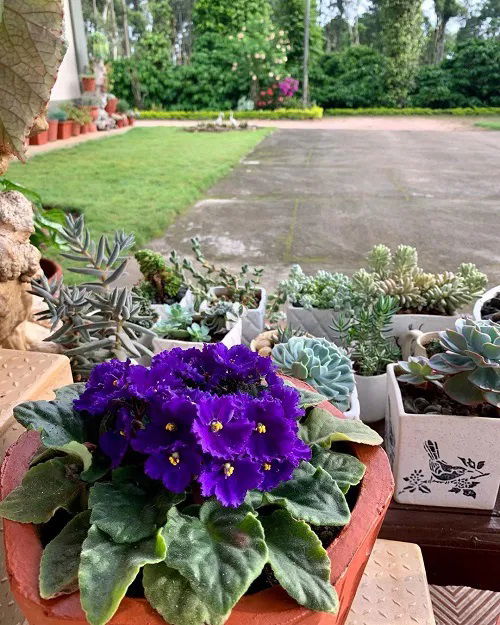
If you want to keep your plant outside to provide fresh air and joyous sunshine, ensure perfect conditions. Do not place it in direct sunlight; move it indoors before the temperature falls below 65 F. You can also keep it in the vicinity of several plants together to provide a microclimate.